
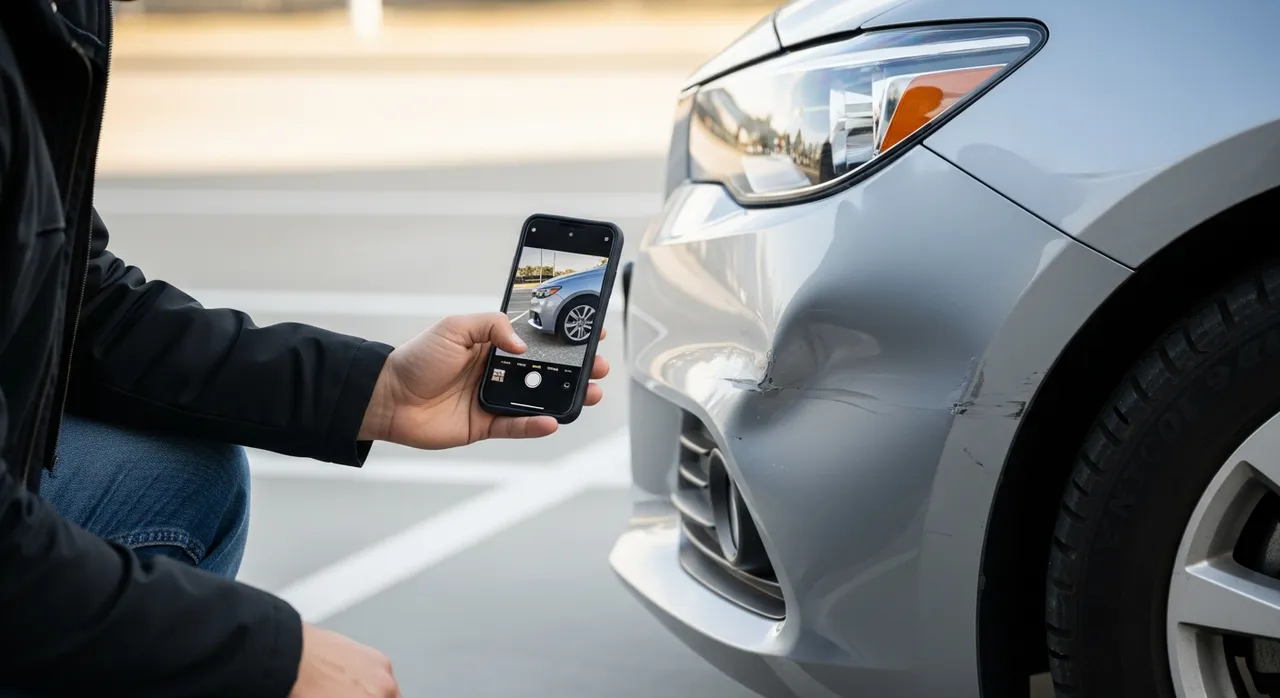
For decades, the body shop estimate process started the same way: accident happens, customer calls the shop, shop waits for an insurance adjuster to schedule an inspection, adjuster shows up days later, estimate gets written, and then the work finally begins. That pipeline is collapsing — not because regulators changed the rules, but because automated photo-estimate technology has made the adjuster's initial site visit largely unnecessary. Here's what that means for your shop, your cycle time, and your competitive position.
Key takeaways
- Automated estimates built on customer photos, VIN data, and live parts pricing can replace the adjuster's initial inspection for most collision jobs.
- Shops that eliminate the adjuster wait step routinely cut days off their cycle time — improving throughput and customer satisfaction simultaneously.
- Automated estimates produce a structured starting point your estimator uses in CCC ONE, Mitchell, Audatex, or any other platform — refining rather than rebuilding from scratch.
- Documentation generated during automated intake strengthens your supplement position when adjusters write low.
- The customer experience improves dramatically — estimates in minutes, not days.
Why the traditional adjuster model is a bottleneck
The original purpose of a physical adjuster inspection was to prevent fraud and ensure accuracy on repair costs the insurer would have to cover. That logic was sound when the only way to document damage was to show up in person with a clipboard. The problem is that model was also brutally slow and inefficient — for the customer, the shop, and even the insurer.
A typical adjuster-dependent claim workflow plays out like this: the customer reports the accident, the carrier assigns an adjuster, the adjuster schedules a time that works for everyone (often 3–7 business days out), the inspection happens, the estimate is written, and only then does the shop get authorization to begin work. For a fender bender, you might be looking at a week or more of waiting before a technician touches the vehicle.
During that entire waiting period, your shop has a customer in limbo, no confirmed repair order, and zero revenue from that job. Multiply that by every claim in your pipeline and you start to see why cycle time — the number of days between first contact and vehicle delivery — is the single most important operational metric for a collision center.
What automated photo estimates actually replace
Automated estimates don't replace licensed adjusters in every part of the claims process. They replace the initial site inspection — the first visit where an adjuster views visible damage and generates an opening estimate. That specific step is the one that causes the most delay and the least value-add for a shop.
Here's what the automated alternative looks like:
- Customer is involved in an accident and pulls out their phone.
- They navigate to your shop's website and start a photo estimate intake.
- The system captures VIN (auto-decoded for full vehicle specs), damage photos from multiple angles, drivability status, and insurance carrier information.
- Within approximately 60 seconds, your shop receives a structured damage report: damage classification (primary, related, or inferred), severity rating, OEM repair procedures, labor hours, and live parts pricing from 200+ vendors.
- The customer receives a preliminary estimate and a confirmation that your team will follow up.
This entire exchange happens before an adjuster is ever contacted. Your estimator already has a detailed, documented starting point — and in many states, that preliminary estimate is sufficient for the shop to begin scheduling, ordering parts, and opening a repair order pending carrier authorization.
The cycle time advantage is measured in days, not hours
The numbers here are significant. Shops using automated photo-estimate intake report cutting 3–7 days off their average cycle time compared to shops that wait for adjuster inspections before beginning the estimate process. At an average collision repair order value of $3,000–$5,000, faster cycle time means more jobs completed per bay per month — which translates directly to revenue.
Beyond throughput, faster cycle time improves customer satisfaction scores, which matters more than ever as carriers increasingly route DRP referrals based on CSI metrics. A shop that can credibly tell a customer "we'll have a preliminary estimate to you within the hour and your car in a bay by Tuesday" is going to win more work than one that says "the adjuster should be out sometime next week."
How the estimate feeds into CCC ONE, Mitchell, and Audatex
One of the most common concerns we hear from shop owners is: "Does this mean my estimators have to learn a whole new system?" The answer is no. The automated estimate is a structured input to your existing workflow — it feeds into CCC ONE, Mitchell, Audatex, and other platforms rather than replacing them.
The structured damage report produced by AutoEstimatePro's intake engine includes:
- Line-item damage classifications with primary, related, and inferred damage clearly separated.
- OEM procedure references for the specific year/make/model captured from the VIN.
- Live parts pricing pulled at the time of submission from your parts vendor network.
- Labor hour estimates derived from a 10,367-case correlation database of real repair data.
- Customer-provided photos organized and attached to the report.
Your estimator opens that report in their inbox, reviews it against the photos, and writes the final estimate in their existing platform — using our report as a reference document rather than starting from nothing. They focus on the judgment calls: flagging hidden damage for teardown, adjusting for shop-specific labor rates, writing supplement notes. The result is an estimate that takes minutes instead of hours to complete.
Documentation that strengthens your supplement position
Here's a benefit of automated intake that most shops don't immediately consider: every piece of data captured during the intake — photos, VIN, customer damage description, preliminary classification — becomes documented evidence in your supplement file.
When an adjuster writes an opening estimate that misses hidden damage, misclassifies a panel, or uses an inappropriate repair procedure, your estimator now has timestamped, customer-provided documentation from before the vehicle was moved or touched. That documentation is far more compelling in a supplement negotiation than a verbal "our technician says there's additional damage."
Shops that have adopted automated intake report shorter supplement cycles and higher supplement approval rates as a secondary benefit — not the main pitch, but a meaningful operational improvement.
The customer experience transformation
From the customer's perspective, the traditional adjuster process is one of the most frustrating parts of a collision claim. They've just been in an accident — they're stressed, possibly without a vehicle, and dependent on multiple parties who don't communicate well with each other. Waiting a week for an adjuster who might not even inspect all the damage feels completely out of their control.
An automated estimate intake gives the customer something to do immediately. They submit their photos, get a preliminary number, receive a confirmation, and feel like something is actually happening. That sense of momentum — even before any physical repair begins — is a significant driver of customer satisfaction and referrals.
For your shop, that same immediate engagement means the customer is already committed to your shop before they've talked to a competitor. You've collected their information, shown competence, and created a relationship — all within the first hour after their accident.
What about total loss vehicles?
Automated estimates are calibrated to flag vehicles where preliminary damage totals suggest a potential total loss threshold based on current ACV data. When the preliminary report indicates total loss risk, the customer is advised that a more thorough inspection is needed and the shop receives a flag in the intake report. This doesn't replace the total loss determination — that requires a licensed appraisal — but it ensures neither the customer nor the shop is blindsided after investing time in an estimate process.
For the majority of collision repair jobs — fender benders, bumper replacements, door damage, front-end repairs — automated estimates handle the full intake process confidently and accurately.
Independent shops vs. consolidators: the automation edge
Large consolidators have invested heavily in digital intake systems precisely because they understand the cycle time and throughput advantages. An independent shop that's still relying on adjuster visits and manual estimate intake is operating at a structural disadvantage — slower to respond, slower to book, and less competitive on the customer experience that influences both consumer choice and DRP relationships.
The good news is that the technology is no longer the exclusive territory of chains with eight-figure tech budgets. A purpose-built system for independent collision centers — photo estimate intake, automated triage, structured reports your estimator can use in CCC ONE or any other estimating platform, and a customer-facing website that drives direct leads — is now accessible at a fraction of what consolidators spend to build it internally.
Getting started: what you need to implement automated intake today
Implementing automated estimate intake doesn't require replacing your shop management system or retraining your team on new software. What it requires is:
- A customer-facing intake form that captures VIN, photos, drivability, and carrier information from any mobile device.
- A back-end report engine that turns those inputs into a structured, line-item estimate using real parts pricing and labor data.
- An integration path that delivers the structured report into your CCC ONE or other estimating platform workflow.
- An automated acknowledgment that confirms receipt to the customer and sets expectations immediately.
That's the full stack. Our platform at AutoRepairEstimate.ai delivers all four as part of a single system purpose-built for collision centers — no custom development, no IT department required.
The bottom line: adjuster wait time is a competitive liability
The body shops winning market share in 2026 are the ones that have eliminated unnecessary waiting from their intake process. Waiting for an adjuster to schedule an inspection before writing a single line of an estimate is a process design flaw — one that automated photo-estimate technology has made entirely avoidable.
Shops that adopt automated intake capture more leads, close them faster, run tighter cycle times, and deliver a better customer experience — all while feeding cleaner, pre-qualified jobs into the same CCC ONE, Mitchell, or Audatex workflows they already use. The adjuster still plays a role in the claims process. They just don't need to be the starting gun anymore.
Frequently asked questions
Does automated estimating replace the insurance adjuster completely?
For the initial damage assessment, yes — automated estimates built on photo submissions, VIN data, and live parts pricing can generate a full preliminary estimate without an adjuster ever stepping foot in the shop. For final settlement negotiations and DRP supplement approval, a licensed adjuster or appraiser is still involved. What automation eliminates is the days-long wait for an adjuster to schedule a physical inspection before the shop can even begin planning the repair.
Is an automated repair estimate accurate enough to use with customers?
Our estimates land within 10–15% of the final shop-written quote in most cases, based on a 10,367-case correlation database and live parts pricing from 200+ vendors. That's accurate enough to set customer expectations, qualify the job, and start production planning — which is exactly what you need before the final teardown estimate is written.
How does the automated estimate work with CCC ONE?
We have no official partnership, certification, or technical integration with CCC ONE, Mitchell, or Audatex. What our system produces is a structured, line-item damage report — damage classifications, labor hours, parts costs, OEM procedures — delivered to your estimator's inbox. They read it and reference it while writing the final estimate in whatever estimating platform they already use. Your existing workflow is unchanged.
What happens when the adjuster and the automated estimate disagree?
The preliminary estimate sets the starting expectation with the customer, not the final invoice. When an adjuster writes a lower number, your estimator already has documentation from the intake — photos, damage classifications, OEM procedure references — to support a supplement. In that sense, automated estimates actually strengthen your supplement position.
Can customers submit photo estimates directly from their phone at the accident scene?
Yes. The intake flow is fully mobile-optimized. A customer can submit VIN or Year/Make/Model, damage photos, drivability status, and carrier information from the scene in under two minutes. Your shop receives the structured report within about 60 seconds, often before the customer even leaves the parking lot.
Cut adjuster wait time. Book more jobs.
Our live photo-estimate widget captures customer damage photos, generates a full preliminary estimate in about 60 seconds, and delivers a structured report your estimator can use in CCC ONE, Mitchell, or Audatex. List your shop free on AutoRepairEstimate.ai — the widget is already on your page — then subscribe for $99/month (founding rate, reg. $299) through AutoEstimatePro to get the requests delivered to you. No setup fee, month-to-month.