
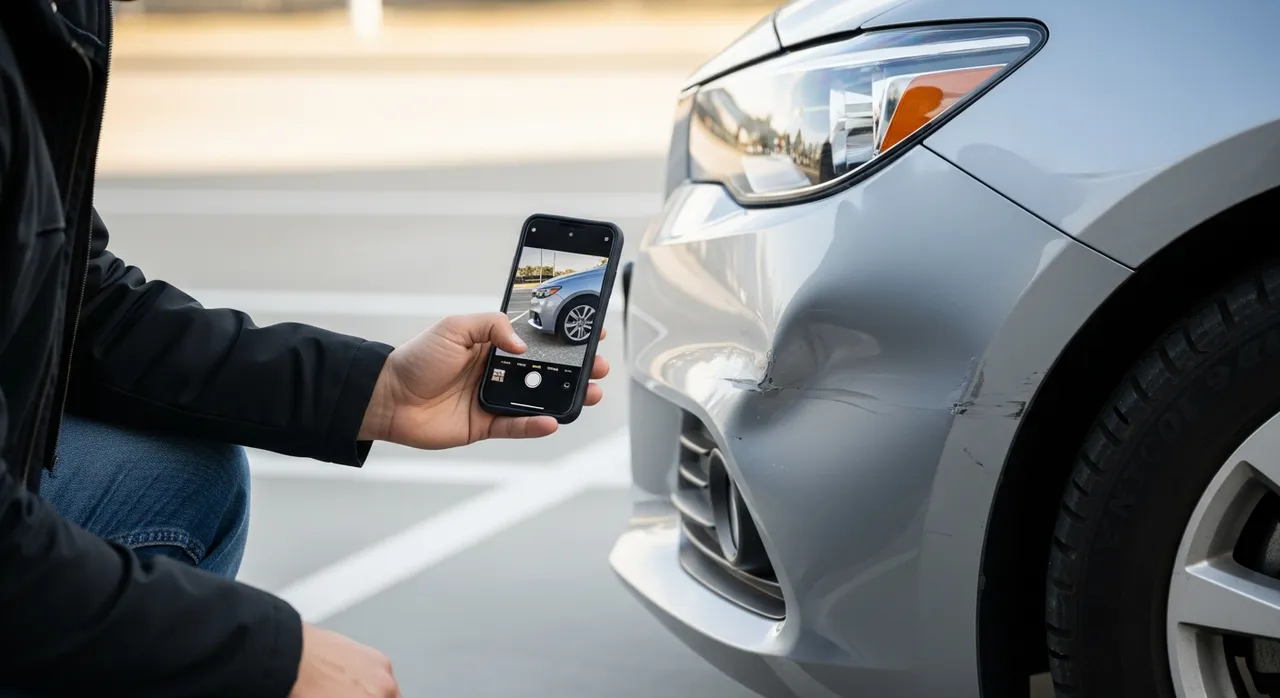
Let's get one thing straight up front: a photo estimate does not replace a professional, in-person teardown. Every experienced estimator knows that hidden damage is the rule, not the exception, and no algorithm in the world is going to find a kinked subframe rail from a smartphone photo. So why are the most successful body shops in North America investing heavily in online photo estimate tools?
Because photo estimates aren't about writing the final sheet — they're about capturing the customer. They sit at the exact moment when a stressed driver is choosing a shop, and they make choosing yours the easiest, lowest-friction option in town. This guide walks through why they convert, how to deploy one without breaking your front-desk workflow, and how the best shops are using them to compound their lead volume month after month.
Key takeaways
- A photo estimate is a lead-capture tool, not a replacement for a real teardown.
- It converts 3–5x better than a "Name / Email / Message" contact form.
- It qualifies leads instantly — your front desk gets a complete intake packet on every visitor.
- Setting honest expectations (preliminary, not binding) builds trust instead of breaking it.
- Pairing it with missed-call text-back creates a 24/7 lead engine that never sleeps.
The consumer psychology shift
Modern consumers prioritize convenience above almost everything else, including price. When someone discovers a dent in their bumper or has a minor collision in a parking lot, the first feeling isn't "I need to find the cheapest shop." It's "ugh, this is going to be a hassle." They dread the prospect of taking half a day off work to drive around to three different shops for in-person estimates, sitting in lobbies, and getting three different numbers they can't really compare.
If your website offers a way to start the process from their smartphone — from their driveway, on their couch, at 11pm — you have removed the single biggest source of friction in the entire purchase decision. That alone significantly increases the chances they'll choose your shop, because you just respected their time in a way none of your competitors did.
The conversion math nobody talks about
A standard contact form on a body shop site tends to convert a small fraction of visitors, while a purpose-built photo estimate intake can convert at a meaningfully higher rate — often several times more, on the same traffic, with no additional ad spend. The exact numbers vary by site, market, and traffic quality, but the pattern is consistent: making it easy to start an estimate from a phone captures more of the visitors you're already paying to attract.
And the leads that come in through a photo estimate aren't just more numerous — they're higher quality. Anyone willing to take photos, fill out vehicle details, and describe their damage is meaningfully further down the buying journey than someone who typed three words into a contact form.
Qualifying leads faster (and saving your front desk)
An integrated photo estimate intake acts as a digital filter and a discovery tool rolled into one. Instead of your team fielding vague phone calls describing "a scratch on the side" and then trying to extract information one painful question at a time, your estimators receive a clean, organized packet on every lead:
- High-resolution damage photos from multiple angles
- Vehicle year, make, model, and VIN (often auto-decoded)
- Drivability status and location of damage
- Insurance carrier, claim number, and deductible status
- Customer contact info and preferred drop-off window
- A preliminary cost range with confidence notes
That packet lets your team rapidly assess whether the job is a good fit for your shop, get ahead on parts research, brief the right technician, and confidently follow up to schedule the in-person inspection. The downstream effect is that your front desk spends less time on phone tag and more time actually closing leads.
How smart automation makes the estimate credible (without overpromising)
The fear most shop owners have about photo estimates is that the number will be wrong and a customer will hold them to it. That's a legitimate concern with a primitive tool. It's a much smaller concern with a properly built system. Our own damage report engine is backed by a 10,367-case correlation database and preliminary estimates typically land within 10–15% of the final shop quote. That's accurate enough to set a credible price range and qualify the lead, and the intake itself is explicit that the final number depends on the in-person teardown.
That combination — a credible range plus a clearly stated disclaimer — is what makes the entire model work. Customers get the comfort of a real number to plan around, and your shop preserves the integrity of the in-person estimate. Nobody is making promises they can't keep.
Setting expectations the right way
A professional photo estimate intake makes its boundaries explicit, in plain language, right on the screen. It says clearly: this is step one. The online interaction produces a preliminary range based on visible damage in the photos. A final, binding estimate requires the vehicle to be present at the facility because hidden damage is common in collision work. That single, honest disclaimer sets the tone for the entire customer relationship — transparency from the very first interaction.
Shops that try to be cute with this — quoting a precise dollar figure online and then surprising the customer at drop-off — destroy trust and generate complaints. Shops that lead with honesty win.
How it fits into your existing workflow
One of the biggest objections shop owners raise is, "We don't have time to manage another channel." That's the right concern, and it's exactly why a modern photo estimate intake is designed to slot into your existing workflow with minimal lift.
- Complete leads land in your email and CRM in seconds — no portal to babysit.
- Photos are organized, labeled, and ready to forward to an estimator or adjuster.
- An auto-response confirms receipt to the customer and sets a follow-up time.
- Optional automated summaries pre-fill the discovery questions your team would otherwise ask.
Pair it with lead response automation and your front desk goes from reactive (chasing voicemails) to proactive (closing well-qualified leads with full context).
The 24/7 lead capture engine
A significant portion of collision damage happens on weekends, evenings, and holidays — and most body shops are closed when their customers most need them. A photo estimate intake doesn't keep banker's hours. A driver who sideswipes a pole at 9pm Saturday can be three minutes into your intake before they've even called their insurance.
Stack that with missed-call text-back and after-hours becomes a real source of bookings instead of a black hole. Every missed call gets an instant text with a link to the intake. Every late-night search lands on a site that can actually capture them.
What a great intake actually looks like
Not all photo estimate intakes are created equal. Here's what separates a real lead-capture system from a glorified form:
- Three minutes or less to complete on a phone.
- Smart fields that auto-decode VINs, autocomplete carriers, and use mobile-friendly keyboards.
- Inline guidance showing example photos for each angle of damage.
- Transparent disclaimers about preliminary vs. final estimates.
- Real-time confirmation so the customer knows they've been heard.
- Clean handoff to your team so leads never get stuck in a queue.
How photo estimates feed your bigger marketing stack
On its own, a photo estimate intake is a powerful conversion tool. Inside a complete marketing system, it becomes the centerpiece. It turns paid traffic from collision repair lead generation into qualified leads instead of clicks. It gives your local SEO work somewhere productive to send all the people you're now ranking for. And it gives your overall lead engine a place to actually convert.
Putting it all together
Online photo estimates aren't about replacing what your estimators do best. They're about meeting modern customers exactly where they are — on their phone, late at night, after the worst part of their week — and turning that moment into a relationship that ends with a booked repair. Add one to your site, set honest expectations, and let your shop do what it's always done well once the vehicle is in the bay.
Frequently asked questions
Are online photo estimates accurate?
They're accurate enough to set a credible price range and qualify the lead — not to write the final repair plan. Our damage report engine is backed by a 10,367-case correlation database and preliminary estimates typically land within 10–15% of the final shop quote. The in-person teardown still finds hidden damage, which is normal and expected for collision work.
Won't a photo estimate scare customers off if the price comes in high?
Done right, it does the opposite. Customers fear the unknown more than the number. A clear, plain-language range with an explanation of what could change it builds trust and dramatically reduces price shock at drop-off. The shops that hide pricing until the customer is standing in the lobby tend to lose more deals, not fewer.
Do I have to commit to the price quoted online?
No. A well-designed intake makes it explicit that the online figure is a preliminary estimate for planning purposes, and that a final, binding estimate requires the vehicle on-site. That's the industry standard and customers understand it — as long as you say so up front in plain English.
What information should a photo estimate intake collect?
At minimum: damage photos (multiple angles), vehicle year/make/model/VIN, drivability, location of damage, insurance carrier and claim number if applicable, deductible status, customer contact info, and preferred drop-off window. Anything more and you create friction; anything less and your team can't actually qualify the lead.
How long should a photo estimate take a customer to complete?
Under three minutes on a phone. If it takes longer, you'll see drop-off climb fast. Smart intake forms reuse data when possible (auto-decoding VIN, pre-filling carrier lists), use the right mobile keyboard for each field, and only ask for information your team will actually use.
See our intake system in action
List your shop free on AutoRepairEstimate.ai — your directory page doubles as a fast, mobile-first website at no cost, with no setup fee. The live photo-estimate widget — backed by our 10,367-case correlation database — already runs on your page. For $99/month (founding rate, reg. $299) through AutoEstimatePro those requests come straight to you. Month-to-month, cancel anytime.