
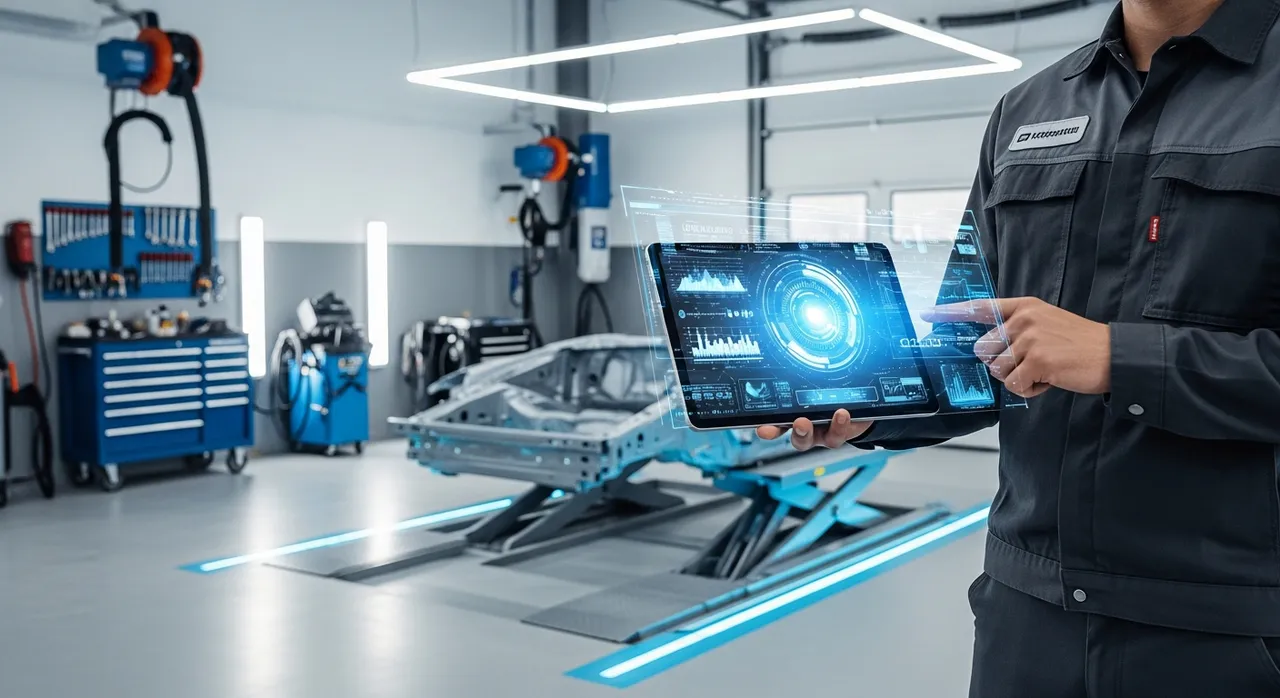
Walk into almost any independent body shop and you'll see the same picture: phones ringing, estimators juggling supplements, insurance adjusters waiting for callbacks, and a stack of digital lead notifications piling up in an inbox that nobody has time to check. Smart automation isn't about replacing the people who make a collision shop work — it's about removing the friction that keeps them from doing it. This guide explains, in plain language, what smart automation actually does in a body shop in 2026 and how it converts more of the leads you're already paying to attract.
Key takeaways
- Speed-to-lead is the single biggest predictor of whether a digital repair lead becomes a job — minutes matter.
- Most leads never convert because nobody followed up fast enough, not because the customer wasn't serious.
- Smart automation handles the boring 80% (intake, triage, acknowledgment) so estimators handle the high-value 20%.
- The biggest automation wins for body shops aren't chatbots — they're photo-estimate triage, missed-call recovery, and CRM-ready summaries.
- A connected automation stack typically pays for itself with a single additional booked repair per month.
The speed-to-lead problem in collision repair
When a customer reaches out to a body shop online — whether through a contact form, a photo estimate, or a missed call — they are almost always actively shopping. They're anxious, they need their car fixed, and they're contacting multiple shops at once. The shop that responds first and most clearly almost always wins the job. Research across service industries shows that contacting a lead within 5 minutes makes you up to 9x more likely to convert. Wait an hour and you've usually already lost.
In the real world of a body shop, that response window is brutal. Your estimators are walking customers around vehicles, writing sheets, dealing with carrier supplements, and managing production. A digital lead sitting unread for two hours isn't unusual — and that lead is gone. The opportunity cost is enormous: shops can spend thousands on local SEO and paid ads to drive leads and then lose half of them to slow follow-up.
What smart automation actually does (and what it doesn't)
Let's be specific. When we talk about automation in a body shop, we're not talking about robots writing final estimates or replacing your team. We're talking about a connected workflow that handles the repetitive parts of digital lead intake so your humans can focus on real conversations and accurate sheets.
What good automation does
- Acknowledges every inbound lead within seconds with a personalized SMS or email.
- Triages the lead by drivability, insurance status, and urgency before it hits your estimator's inbox.
- Extracts vehicle data (Year/Make/Model/VIN) from customer inputs and formats it cleanly.
- Generates a preliminary damage report from photos for the estimator to review.
- Routes the lead to the right person, location, or queue based on rules you define.
- Handles missed-call follow-up with a text-back that includes a photo-estimate link.
- Answers common FAQs ("Do you take Geico?" "Do you offer rentals?") 24/7.
What good automation does NOT do
- Write a final supplement-grade estimate.
- Negotiate with insurance adjusters.
- Replace the human conversation that closes a repair order.
- Make decisions about totaling a vehicle or recommending DRP vs non-DRP.
The line is clear: automation handles structured, repetitive work. People handle judgment, expertise, and trust.
The four highest-ROI automations for a body shop
After working with shops across the country, four specific automations stand out for the impact they have on booked jobs. If you only do these, you'll capture and convert far more of the leads you already have.
1. Photo-estimate intake and triage
An online photo-estimate system lets customers start a quote right from their phone, at the curb, often within minutes of the accident. The automation layer then enriches that submission: it asks the carrier/deductible/drivability questions in a logical order, extracts vehicle data, and produces a preliminary damage assessment. Our engine, backed by a 10,367-case correlation database, returns a preliminary estimate that lands within 10–15% of the final shop quote — giving your estimator a real starting point instead of a vague "rear bumper damage" note.
2. Missed-call text-back
Up to 40% of inbound calls to busy shops go unanswered during the day, and almost 100% go unanswered after hours. Without automation, those callers go straight to the next shop on Google. With a missed-call text-back system, a missed call triggers an instant SMS — "Sorry we missed you, here's a link to start a photo estimate, and we'll call you right back" — that captures the lead before they move on.
3. Instant lead acknowledgment + CRM-ready summary
Every form submission or photo estimate should fire two things automatically: a friendly SMS to the customer confirming receipt, and a clean, structured summary to your shop management system or inbox. The estimator opens it and sees: customer name, contact, vehicle, carrier, drivability, photos, and a preliminary damage report — ready to action. No re-typing, no chasing missing info.
4. After-hours capture and weekend coverage
More than 30% of body shop leads come in after hours, evenings, or weekends. Without automation, every one of those leads waits. With it, the customer gets the same instant experience as someone calling during business hours — acknowledgment, photo-estimate flow, follow-up scheduled — and your team walks in Monday to a queue of warm, qualified leads instead of a cold inbox.
The integrated stack — why disconnected tools don't work
The biggest mistake shops make is bolting together a half-dozen disconnected tools — a chatbot, a separate text service, a form plugin, a CRM, an SEO plugin — and hoping they talk to each other. They don't. Leads fall through the cracks between systems and the team spends more time managing the tools than serving customers.
The shops that win run an integrated stack: the website, the photo-estimate intake, the SMS layer, the missed-call recovery, and the lead inbox all live in the same platform and pass data cleanly. That's the architecture behind AutoRepairEstimate.ai — your free directory listing is the front door, and the live photo-estimate widget, billed through AutoEstimatePro with its own lead dashboard, turns every submission into a booked-ready lead, so a single lead flows from first click to estimator's inbox without anyone touching it.
What about chatbots?
Chatbots get most of the press, but they're actually the smallest piece of the automation puzzle for a body shop. A well-trained chat assistant can answer routine questions — hours, location, insurance accepted, rental availability, basic timing — and hand off cleanly to a human when the conversation needs judgment. That's useful. But chat alone won't move the needle on booked jobs the way photo-estimate triage and missed-call recovery will.
If you're going to invest in chat, train it on your specific policies, your DRP relationships, and your real workflows — not a generic auto repair script. And make sure it's wired into the same lead inbox as everything else.
The ROI math: why automation pays for itself fast
Here's a typical scenario for a single-location independent shop. The shop already runs local SEO and pays for some lead generation. They get roughly 60 digital leads a month, of which they currently convert maybe 12 (a 20% rate, which is industry-typical for slow-follow-up shops).
Layer in real automation — instant acknowledgment, photo-estimate triage, missed-call text-back, after-hours capture — and that conversion rate can climb meaningfully. As an illustrative example: if a shop captured even a handful of additional jobs a month at an average collision repair order of $3,000–$5,000, that would add thousands of dollars in monthly revenue from leads the shop was already paying to attract. Actual results vary by shop, market, and traffic, but for automation that costs a few hundred dollars a month, it doesn't take many recovered jobs to pay for itself.
Common objections (and the honest answers)
"I don't want automated messages going to my customers — it feels impersonal."
The most impersonal experience is silence. A 3-hour delay before a human reply feels far worse than a friendly automated acknowledgment that tells the customer their request was received and a real person will follow up. Done well, automation makes your shop feel more responsive and professional, not less.
"My estimators won't use it."
They will, because it removes work from their plate. The fight is rarely with the estimator — it's usually with the front-office process. Estimators love getting a clean, triaged lead with photos, vehicle data, and a preliminary report already attached. What they hate is re-typing the same info five times.
"Automation feels like a lot of risk."
The real risk is your existing process — a single estimator going on vacation, a busy Saturday, an after-hours rush — and the resulting lost leads. Automation is the safety net under the work you already do.
How to start (without overcomplicating it)
You don't need to roll out every automation at once. Sequence it:
- Week 1: Add a real photo-estimate intake to your website.
- Week 2: Turn on missed-call text-back on your business line.
- Week 3: Wire up instant SMS acknowledgments for every lead.
- Week 4: Connect the lead inbox to your shop management system.
By the end of the first month you'll already see the lift — and you'll have built the foundation for everything else. Our Lead Response Automation system runs all of this end to end so you don't have to stitch it together yourself.
The bottom line on automation in body shops
Smart automation in 2026 isn't science fiction and it isn't a threat to your team. It's a practical tool that solves a specific, painful problem: too many leads slipping through too few hands. Used well, automation makes your shop feel faster, sharper, and more professional than the consolidator across town — and it does it while your estimators are doing the work only they can do. The shops that adopt this now will spend the next five years pulling ahead of the ones that don't.
Frequently asked questions
Will smart automation replace my estimators?
No. Automation handles the repetitive, time-sucking parts of lead intake — sorting requests, extracting vehicle data, sending instant acknowledgments, triaging by drivability and carrier — so your estimators spend their time on real customers and accurate sheets, not on data entry. Shops that automate intake report estimators reclaiming several hours a day for higher-value work.
How fast does a body shop need to respond to a digital lead?
The widely cited research is that contacting a lead within 5 minutes makes you 9x more likely to convert than waiting an hour, and the conversion rate falls off a cliff after 30 minutes. For collision repair specifically, where customers are anxious and shopping multiple shops, speed-to-lead is often the single biggest factor in whether they choose you.
What happens to leads that come in after hours?
Without automation, after-hours leads usually sit in an inbox until the morning — and the customer has already chosen a competitor by then. With an automated intake system, the customer gets an immediate acknowledgment, a link to the photo-estimate tool, and clear next steps. By the time your estimator is at their desk in the morning, a complete intake is already in the inbox.
Is this just a chatbot?
No. A useful body shop automation system is much more than a chatbot. It's a connected workflow: photo-estimate intake, automated triage and routing, missed-call text-back, instant SMS acknowledgments, CRM-ready summaries, and integrations with your phone system, calendar, and shop management software. Chat is a small piece — the bigger value is the end-to-end automation.
How does AutoEstimatePro's automation assist with damage reports?
Our damage report engine is backed by a 10,367-case correlation database that turns customer-submitted photos into a preliminary estimate that lands within 10–15% of the final shop quote. That gives your estimator a starting point, the customer realistic expectations, and your front desk a triaged lead instead of a vague form submission.
Automate your intake. Convert more leads.
List your shop free on AutoRepairEstimate.ai — your directory page doubles as a fast, mobile-first website at no cost, with no setup fee. The live photo-estimate widget already runs on your page. For $99/month (founding rate, reg. $299) through AutoEstimatePro those requests come straight to you, with your own lead dashboard. Month-to-month, cancel anytime.